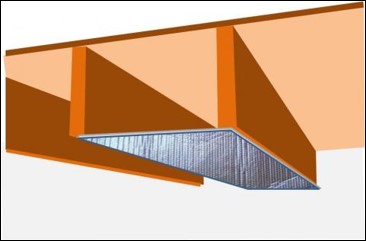


The 2021 IRC/IECC requires insulation on all ducts outside conditioned space. The required R-value applies equally to supply and return ducts and depends on size:
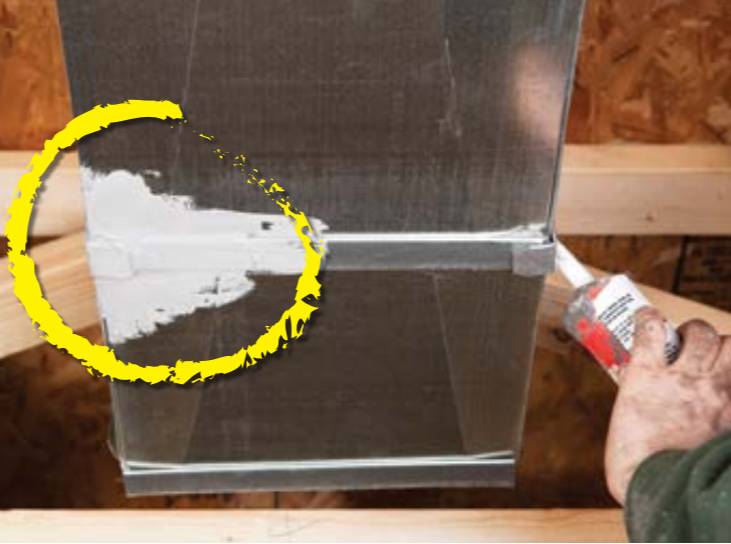
Like the 2018 version, the 2021 IRC/IECC requires that all ducts, air handlers, and filter boxes be sealed.
Sealing must follow the details in the 2021 IRC, which allows the use of mastics, liquid sealants, and tapes. The 2021 IECC also allows the use of air-impermeable spray foam products as both duct insulation and sealant.
Air handlers must be designated for leakage of no more than 2% of the design air flow rate (per ASHRAE 193).
A duct blaster test must be conducted to determine the Total Leakage of all duct systems serving a heating or cooling system. Systems where all components are within the thermal envelope are no longer exempt from the testing requirement, as they were with the 2018 IECC.
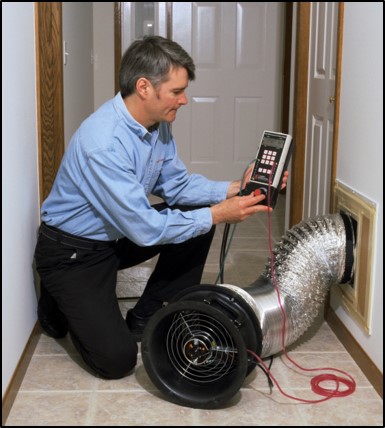
The 2021 IRC/IECC specifies different leakage limits depending on the test conditions. In all cases the limits are based on the conditioned floor area (CFA) of the house:
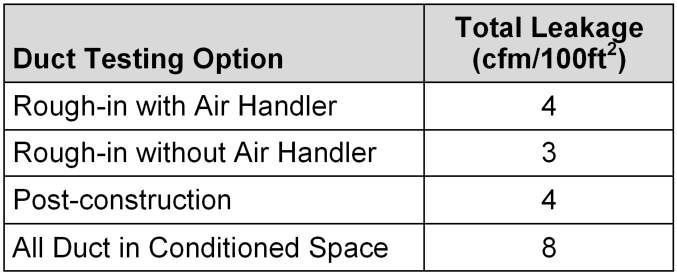
(Note: these limits only apply to projects following a prescriptive compliance pathway. Projects following a performance or ERI pathway are allowed to trade off higher duct leakage for improved performance in other areas.)
For ducts to all be considered "within the building thermal envelope", they must be on the interior side of both the insulation and air barrier. Therefore, if any ducts are located in attics, vented crawlspaces, or exterior wall cavities, the system must be tested and meet the leakage requirements.